Translation Glossary
Every software project develops its own vocabulary: product names, feature labels, UI conventions, industry terms. Without a shared reference, different translators make different choices — one uses "Sign in", another uses "Log in", a third writes "Login". To a user switching languages, the inconsistency signals carelessness even when the translation is technically correct. A translation glossary is the fix.
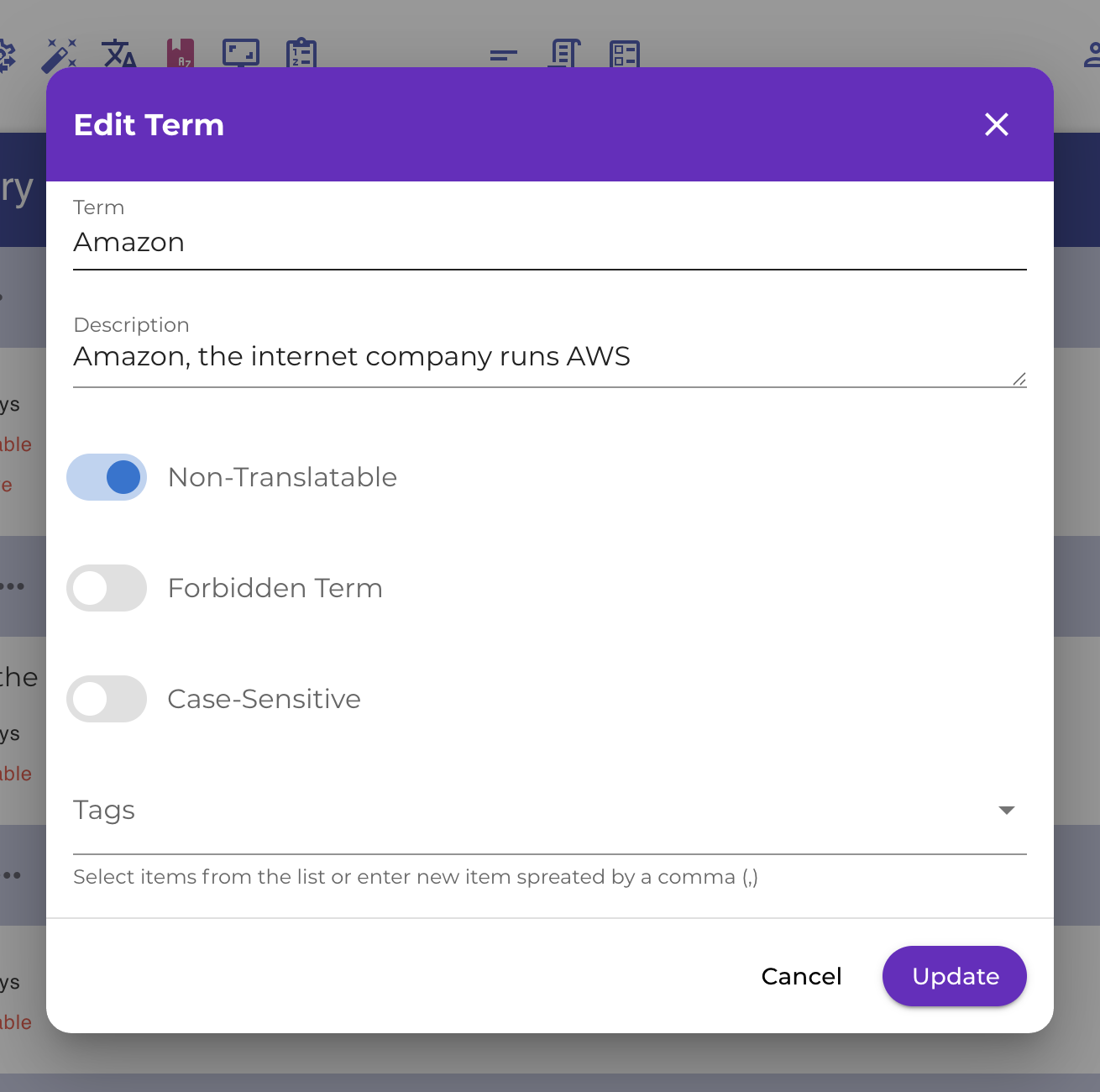
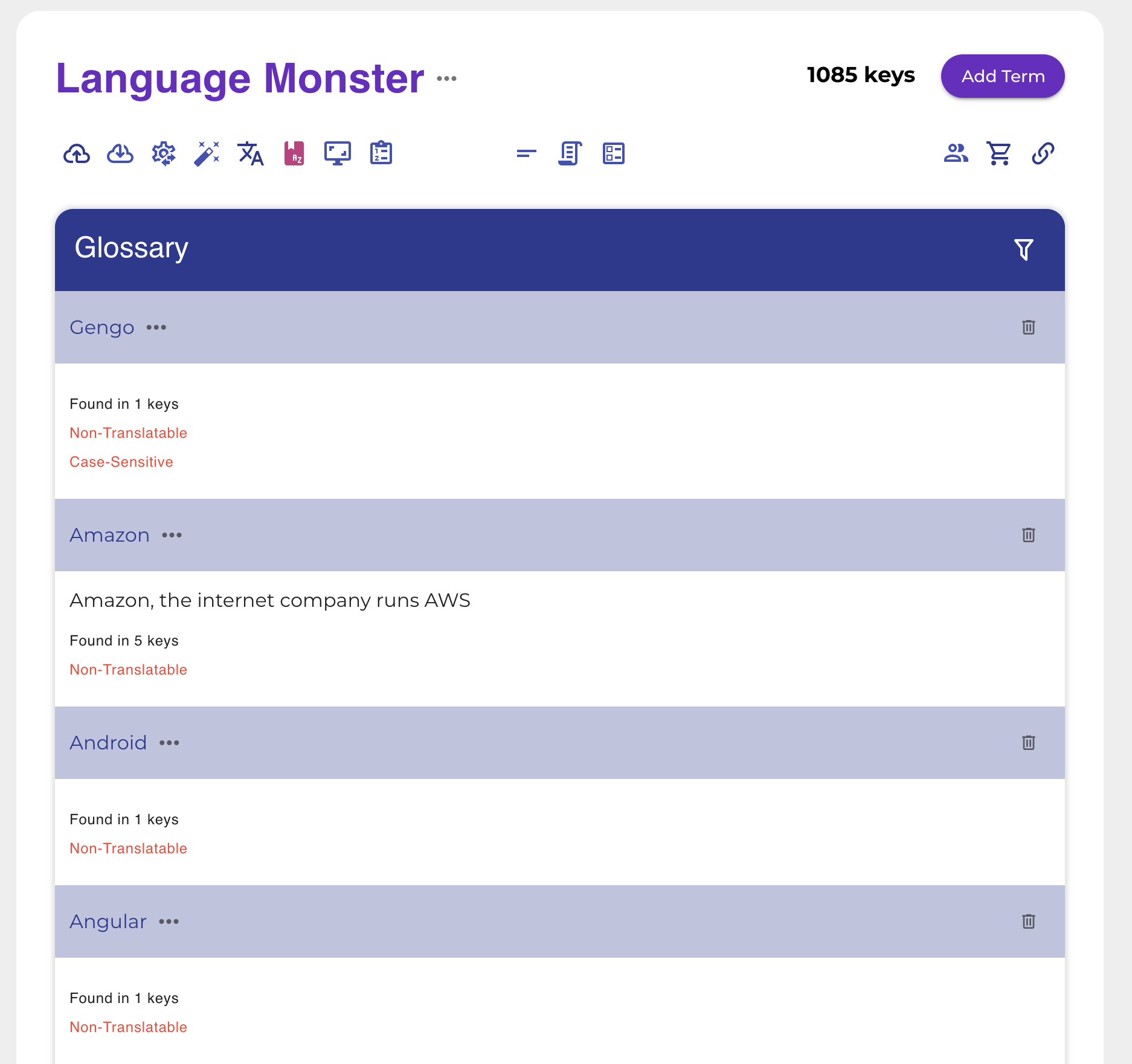
Language Monster's glossary lets you define a curated list of approved terms and their translations in every target language. When a translator works on a string containing a glossary term, that term is highlighted inline and the approved translation is shown immediately — no searching, no guessing. Terms can be marked as required, meaning the approved translation must be used, or advisory, meaning the suggestion is offered but the translator can adapt it if context demands.
Glossaries are shared across your entire team. Whether a project has two translators or twenty working in the same language, every one of them sees the same approved terms. This is especially valuable when managing multiple regional variants of the same language, where terminology choices may differ between variants but need to be internally consistent within each one.
Glossaries also pay dividends when source content changes. When a product is renamed or a UI term is updated, changing the glossary entry flags every string where the old term appeared — making targeted reviews straightforward rather than requiring a full re-check of all translations.
Each glossary entry can carry the correct translation for every target language your project supports simultaneously, giving your whole team a single source of truth for approved terminology.
Read more about how your translators gain from Language Monster