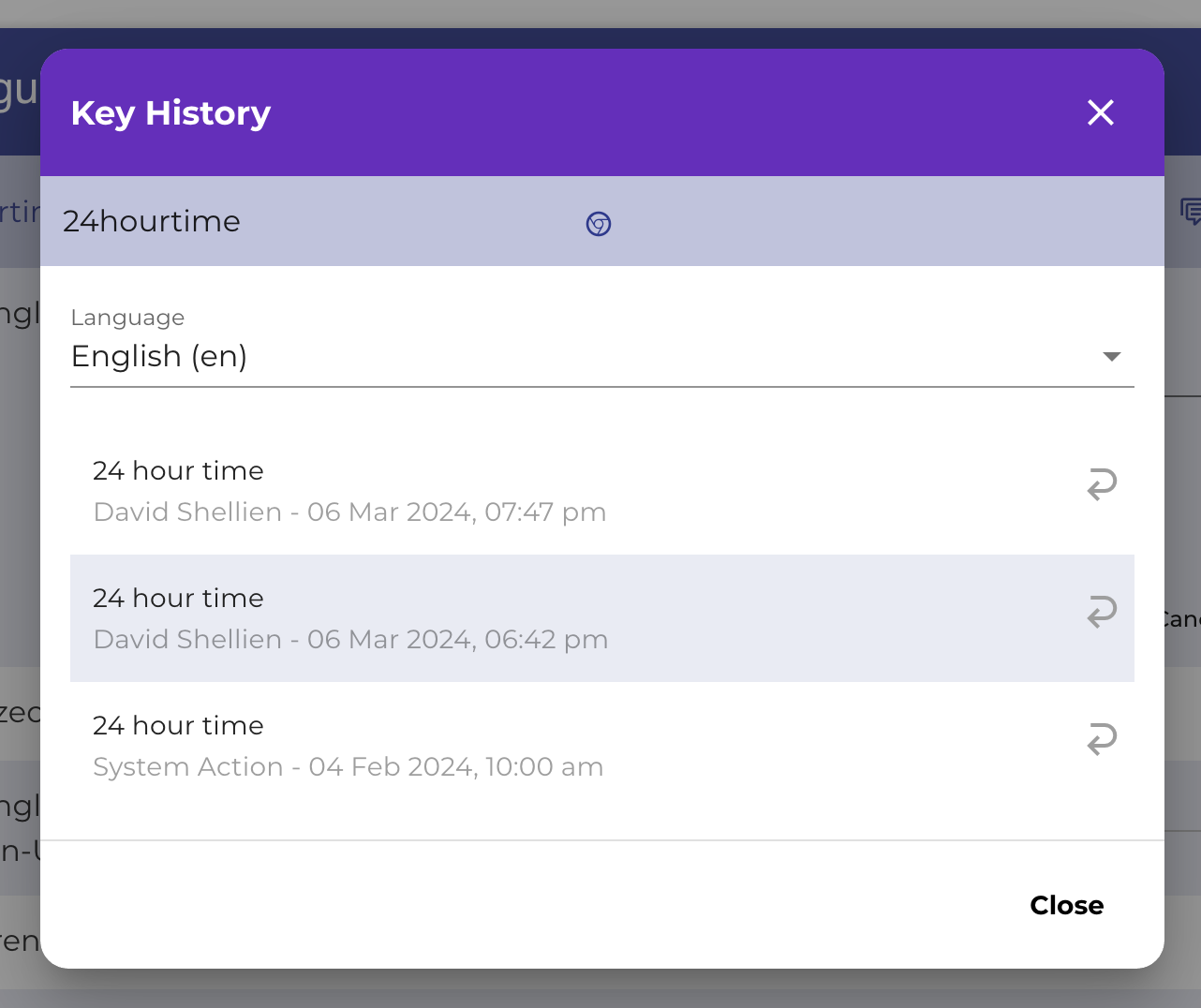
Translation History
Every change made to a translation in Language Monster is recorded — who made it, when, and what the previous value was. This gives you a complete audit trail across every string in your project, not just a vague last-modified timestamp.
The most immediate use of history is recovery. Mistranslations happen, especially when multiple people work on the same project or when machine translation suggestions are applied in bulk. Translation History means any string can be rolled back to a previous version in a single action. No work is ever irretrievably lost, and no change is permanent if it turns out to be wrong.
History also changes how teams handle quality review. Instead of checking every string before a release, a reviewer can filter for strings changed since the last review cycle. This targeted approach is faster and more accurate — you see exactly what is new and can assess the risk of each change in context, rather than re-reading content you already approved.
When a string is causing unexpected behaviour in production — a button label wrapping incorrectly, an error message confusing users — history lets you trace exactly when the string changed and who made the change. That diagnostic information is often the quickest route to identifying and fixing the problem.
For teams in regulated industries, or for any organisation that needs to demonstrate accountability around content changes, the translation history log provides the evidence trail required without any additional effort from the team.